
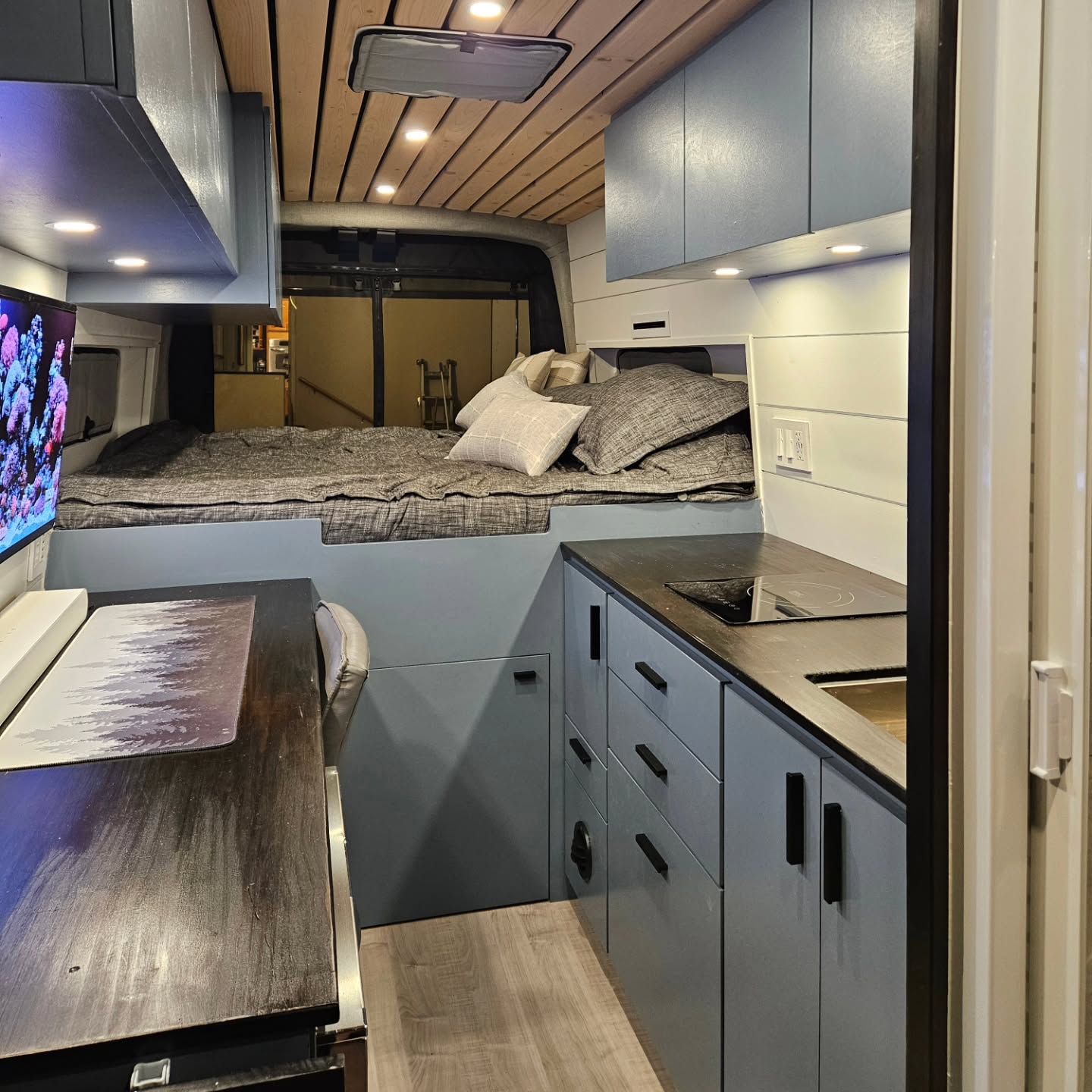
I bought a 2023 Ford Transit Trail AWD with the extended body and high roof to turn it into a camper. The extra length gave me room for a shower and storage, but both had to fit alongside the rest of the systems I wanted to carry. These photos follow the conversion from the first flooring and framing photos in 2025 to the finished interior in September 2026.
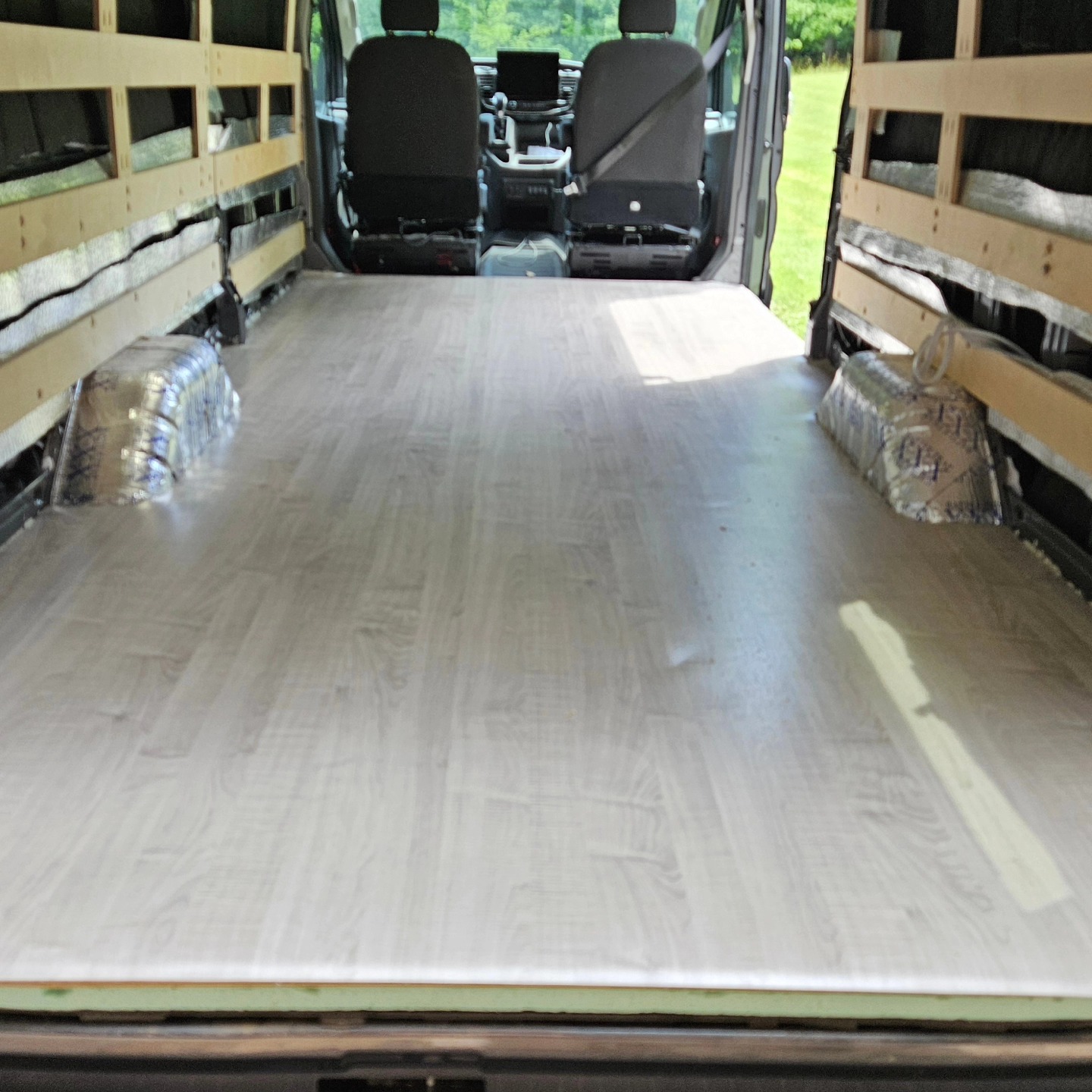
2025: Flooring, framing and the bed platform
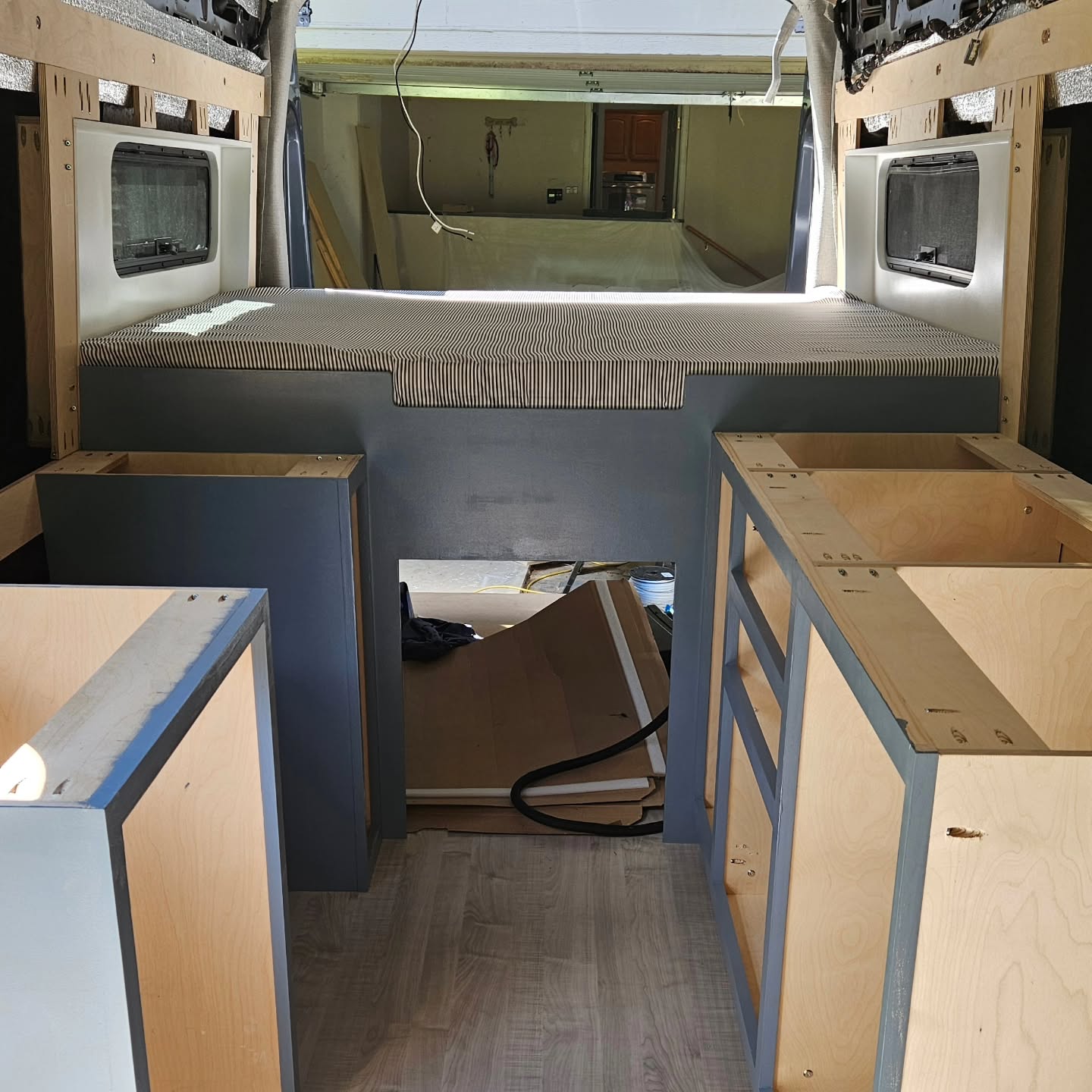
The build started with a clear floor and exposed wall framing. By September, the bed platform and the cabinet frames made it easier to see how the space would work. The aisle was already taking shape between the cabinets.
April: The interior takes shape
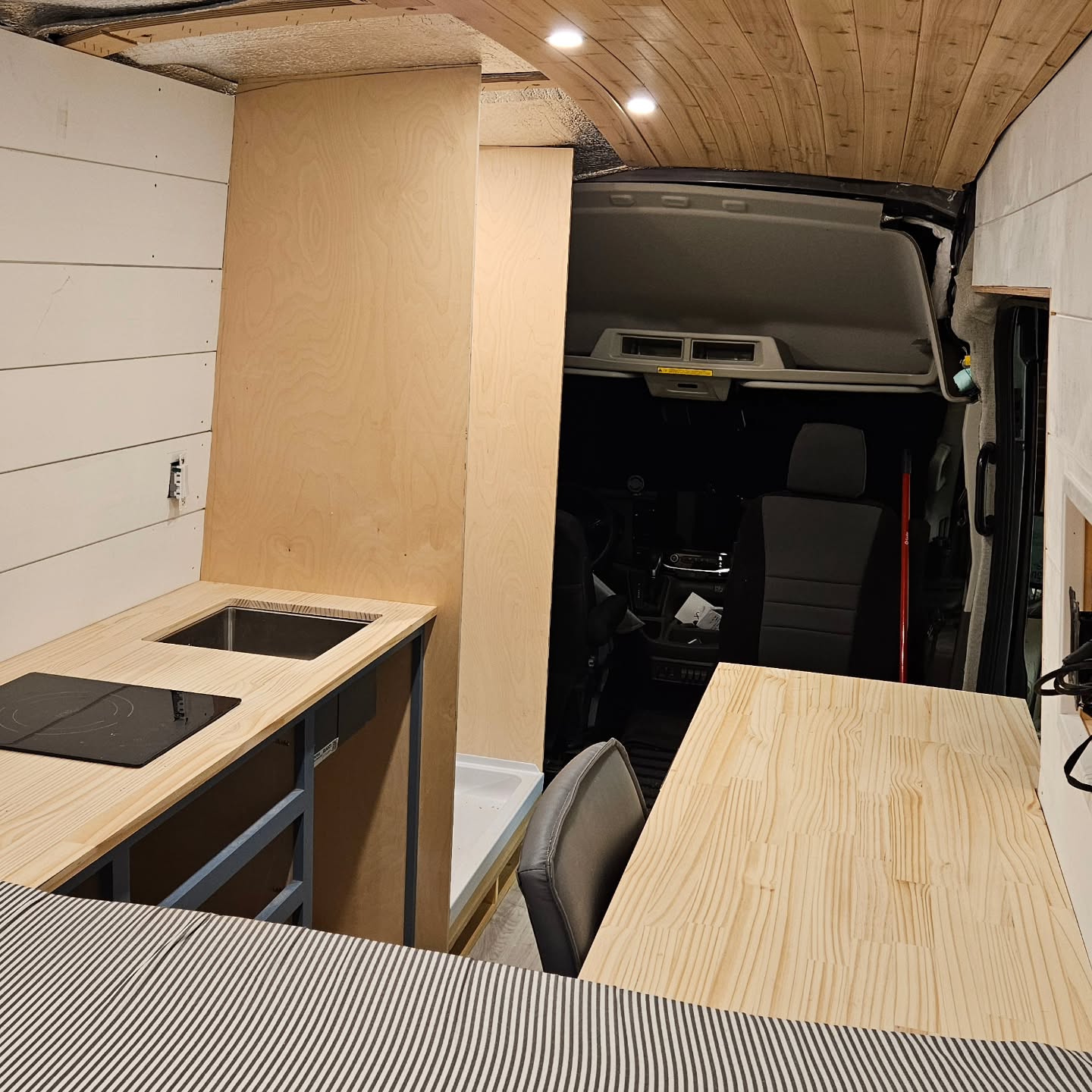
The April progress photos show the van before the ceiling and cabinets tied everything together. This is the part of the build that’s easiest to forget once the trim goes on. Every wall, cabinet and compartment takes up some of the same space, and the choices here determine how much room there is to move through the finished van.
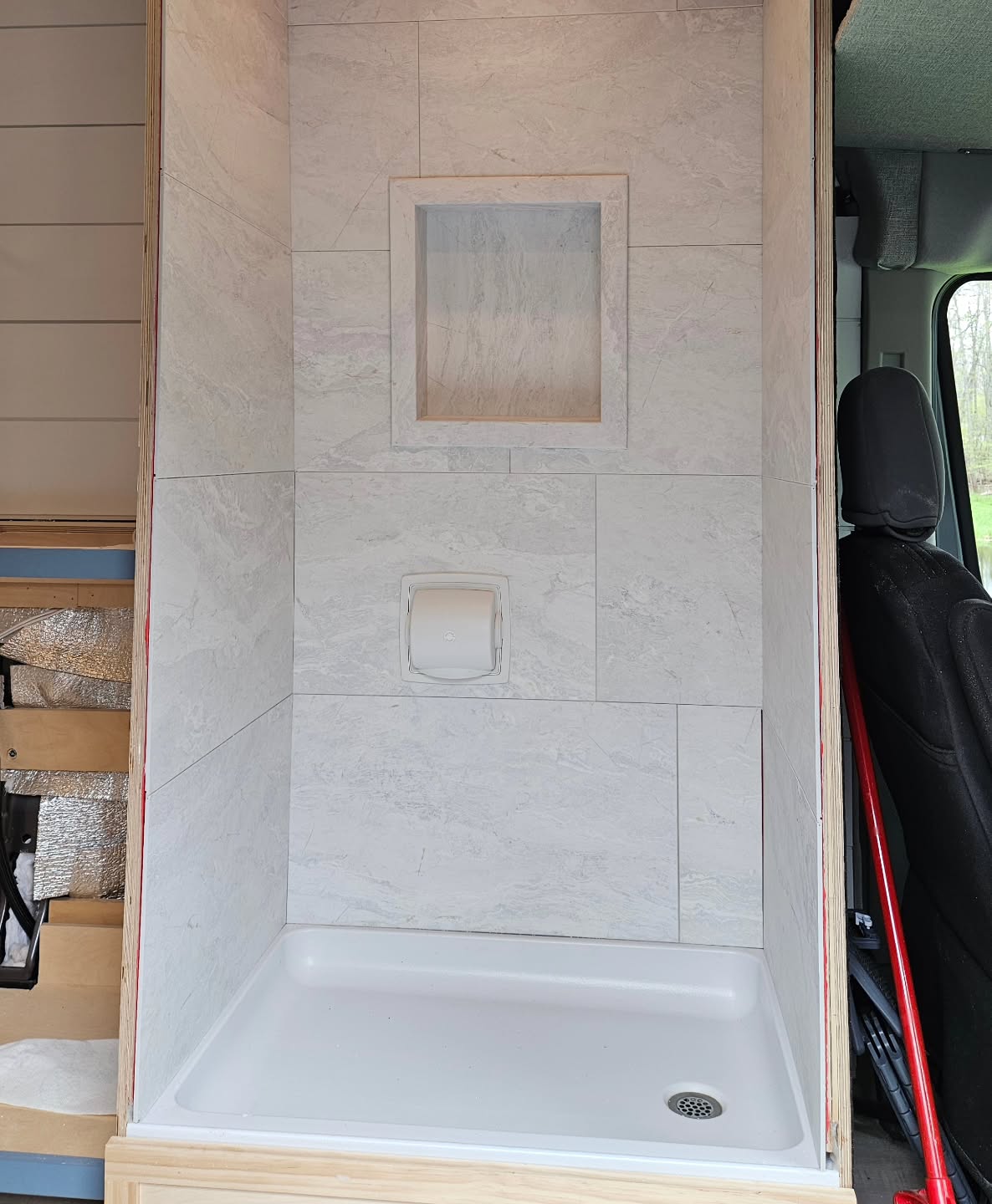
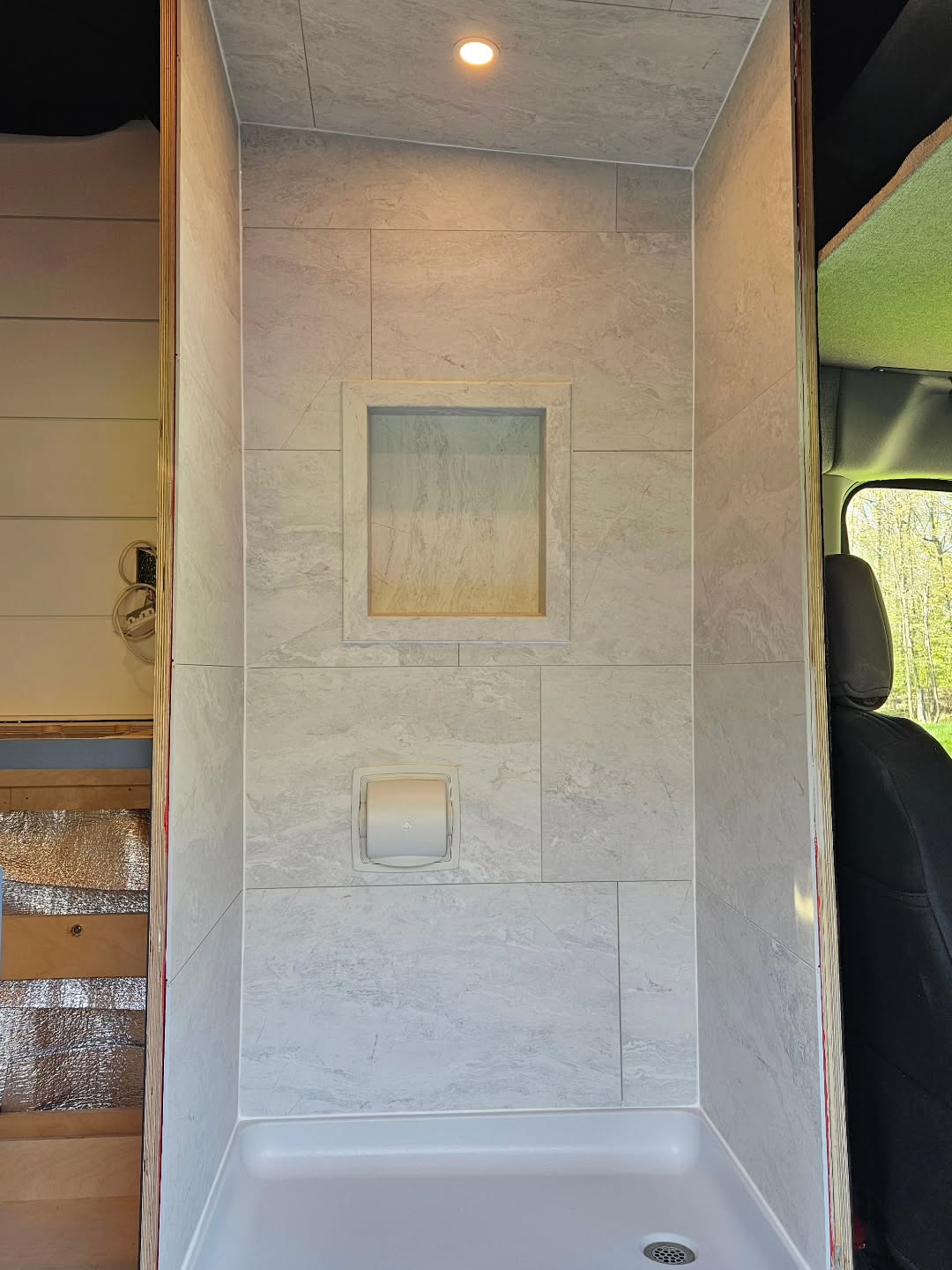
May: The shower and pine ceiling
I wanted a shower inside the van, so the enclosure had to work in the space I also needed for storage and a walkway. The early May photo shows the shower pan and walls during construction. The next one shows how the space looked once the enclosure came together. The water system serves the sink, indoor shower and an outdoor connection, with a diverter for winter use.
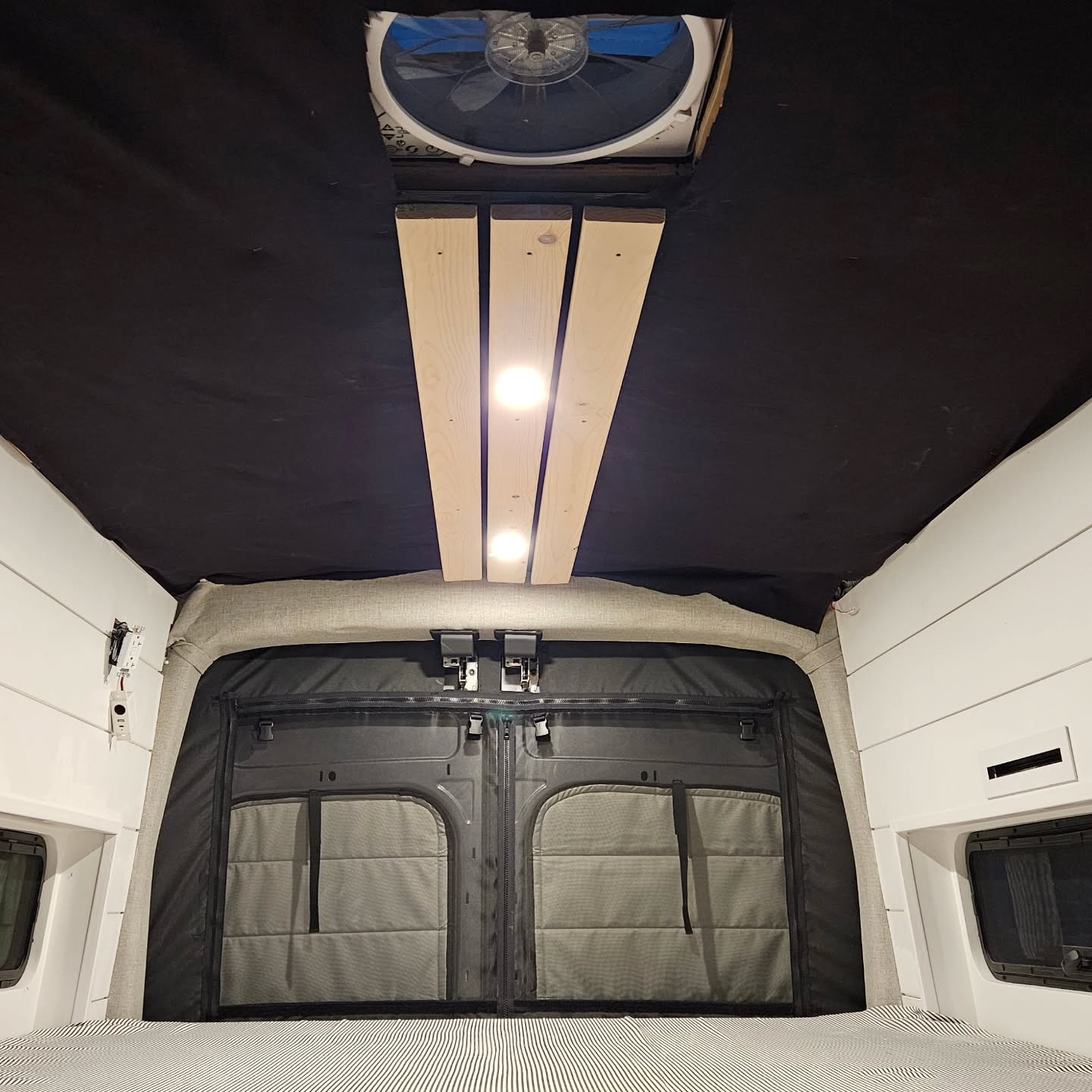
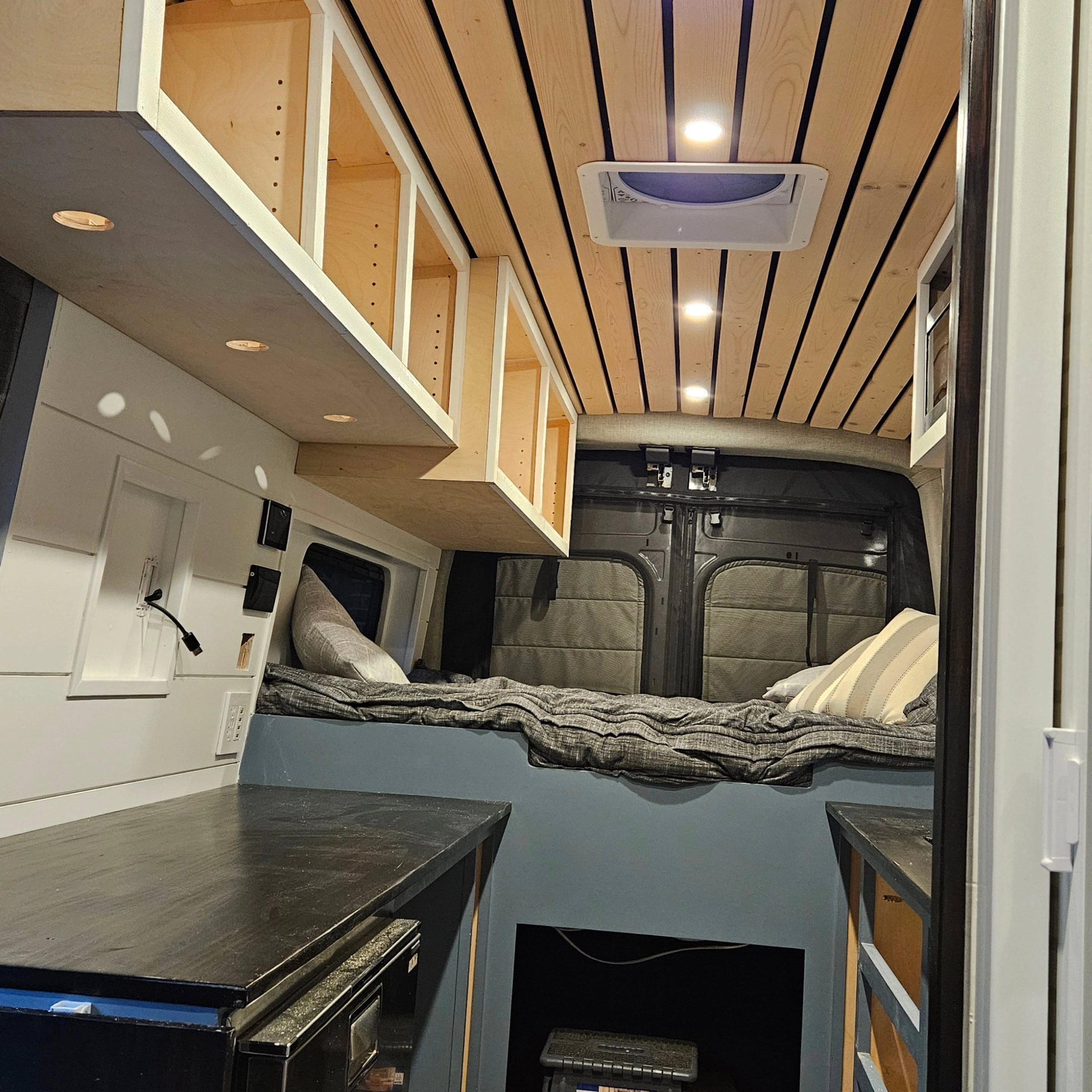
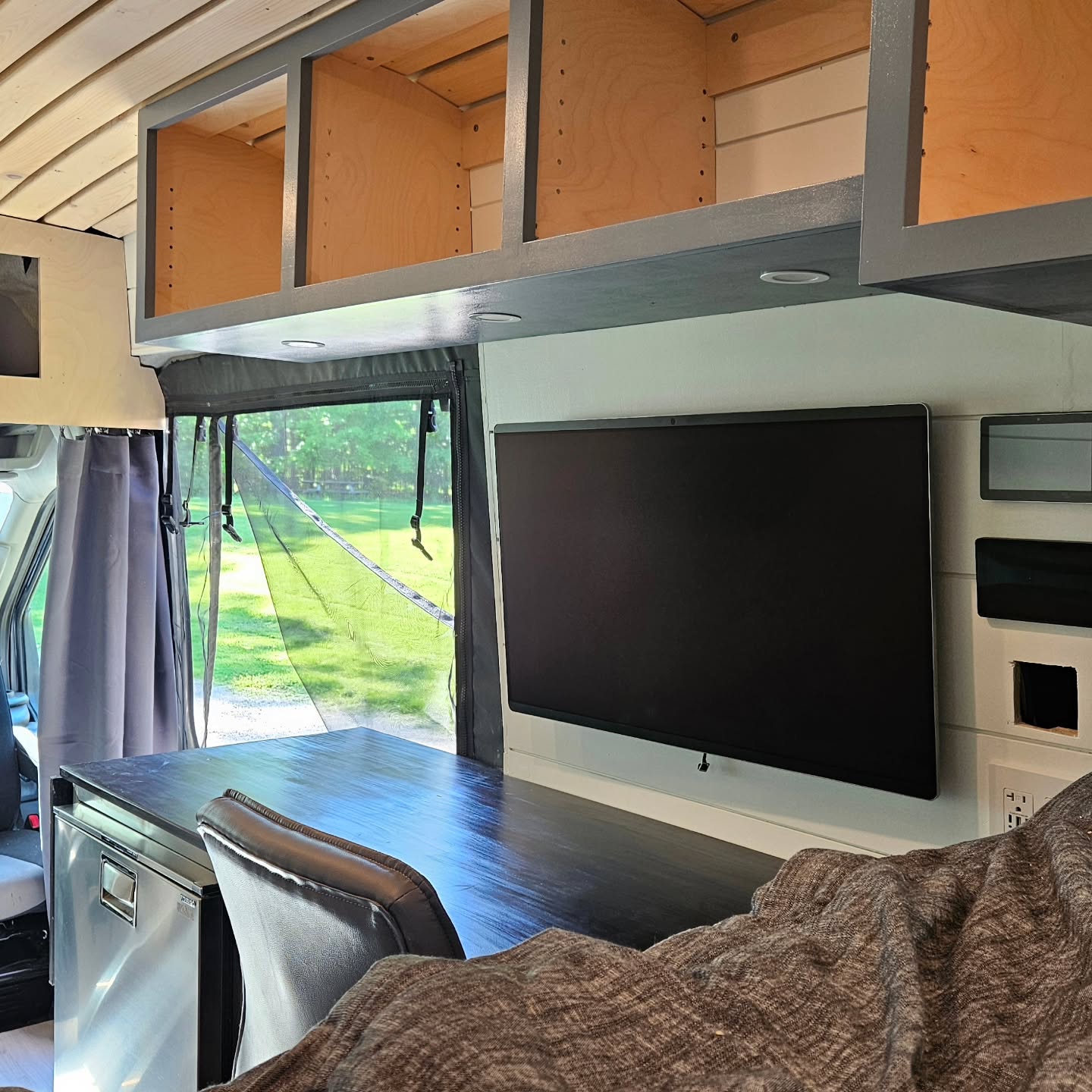
I went with a pine slat ceiling. The individual boards give the long interior some texture and contrast with the cabinetry. The May photos show the ceiling going in, then how it looks alongside the cabinets.
May and June: Overhead storage and plumbing access
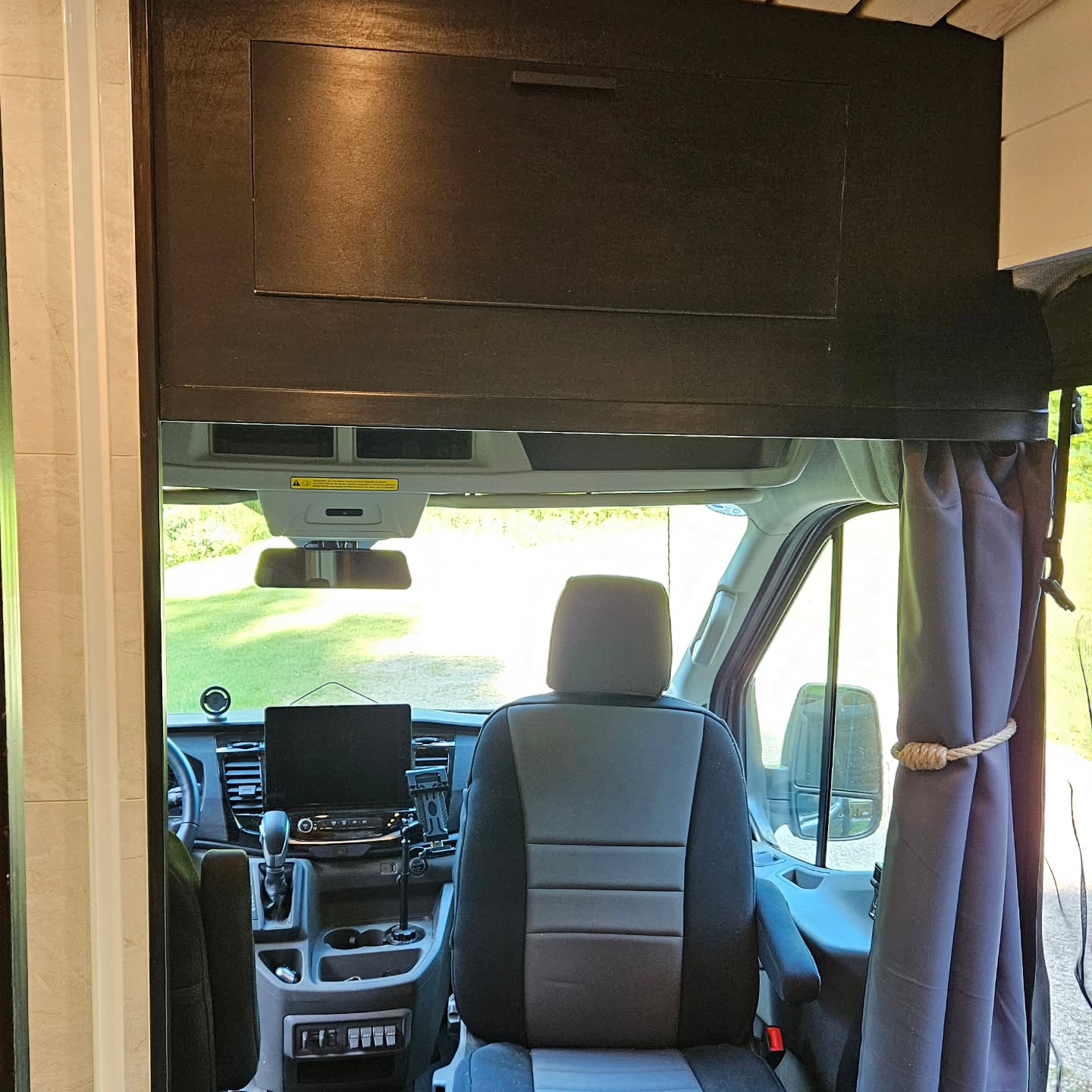
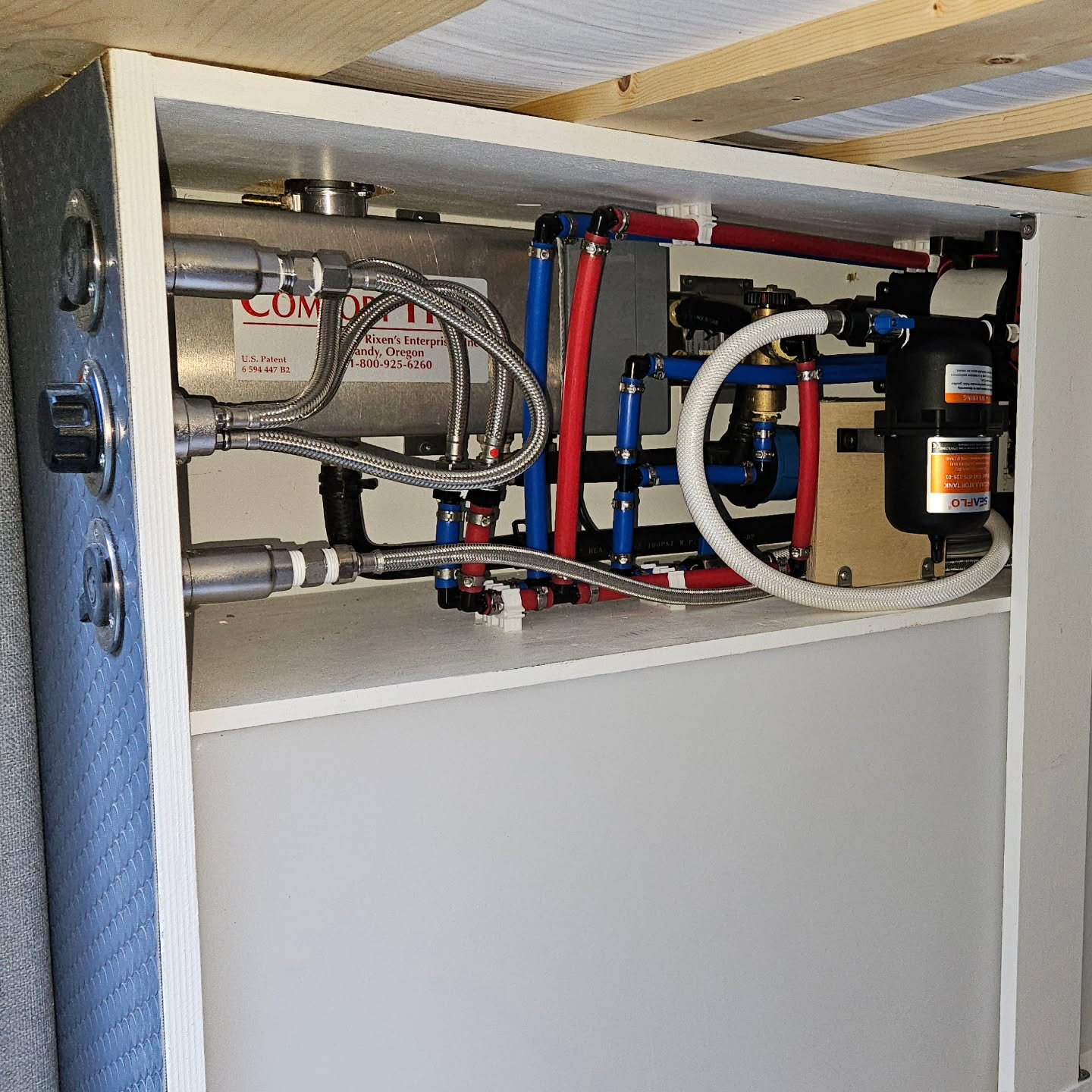
I used flat doors on the upper cabinets and Shaker-style doors on the lowers. I also added a cabinet over the cab to put that otherwise awkward space to work. The June photos show the overhead cabinet and the plumbing compartment, two places where getting the layout right mattered more than what you see from the aisle.
The electrical and climate systems
I used four 460 Ah Epoch lithium batteries and Victron components for the electrical system. Four 250-watt solar panels on the roof provide 1,000 watts of rated solar capacity. The roof also carries a MaxxAir fan and uses a Unaka roof rack. The Victron equipment includes three Victron Orion XS 50 A DC-to-DC chargers, and a Victron MultiPlus-II 12/3000 inverter/charger.
For cooling, I installed a 12-volt air conditioner from UndermountAC.com. In my van, it hasn’t been able to bring the cabin down to the temperature I set, so I wouldn’t recommend it based on my results so far. I’m giving it another chance next year by moving the vents to see whether better airflow improves the cooling.
For heat, I use a Rixen’s hydronic system. It heats the cabin air and provides hot water.
Where the build started
If you want the story of how I found the van and brought it home, start with From Dream to Drive. The photos here are from my Seeking Solitude Instagram.