
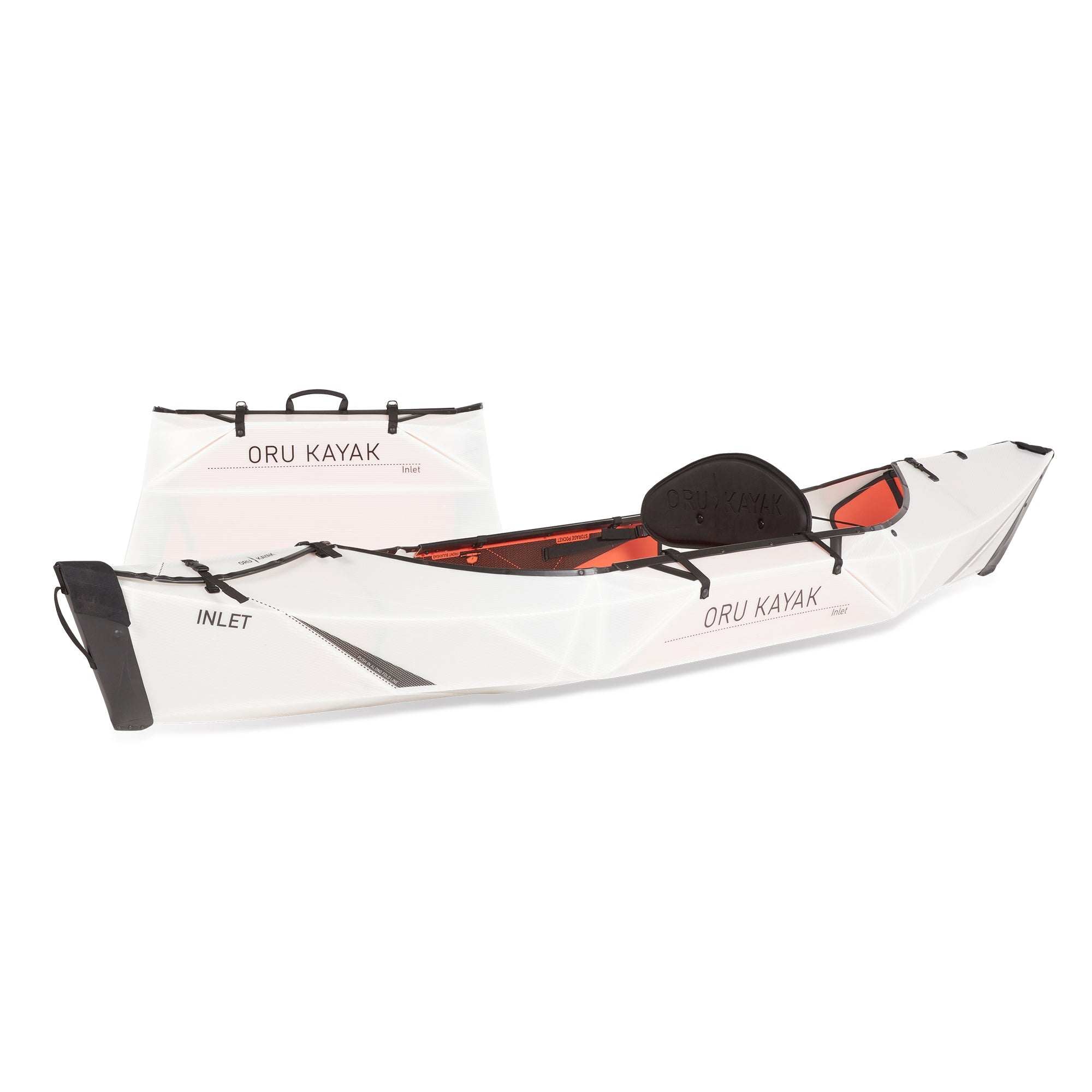
Evidence note. This guide evaluates the standard Inlet from published specifications and camping considerations; it does not report firsthand testing of this exact model. Oru’s model comparison was checked November 20, 2026. The labeled illustrations show general packing and campsite ideas rather than verified product photographs.
Affiliate disclosure. As an Amazon Associate I earn from qualifying purchases.
Research-based buying guide, based on published specifications and van-camping considerations.
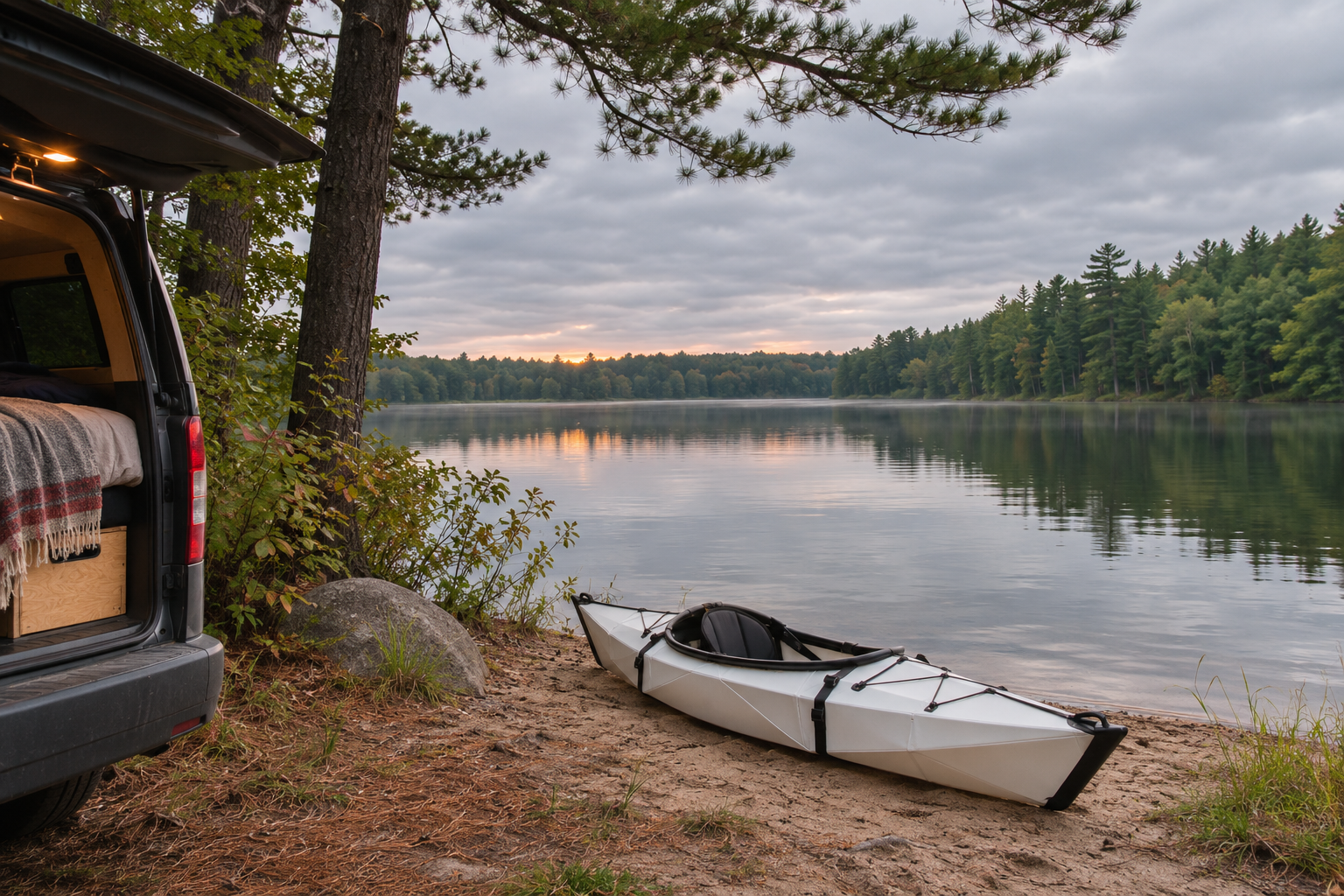
The point of bringing a kayak in a van is to make it easier to say yes when a quiet lake turns up along the route. A full-size boat can make that decision for you before you leave home. The Oru Inlet is interesting because it folds down and travels inside. I’d judge it by how easy it is to get out, set up, and put away again when the rest of the van is already packed.
What the Inlet is built for
Oru lists the standard Inlet at 20 pounds with a 275-pound capacity and rates it for calm water. That makes it a candidate for sheltered inland paddles. I’d count myself and all the gear going aboard against that limit. The standard Inlet and Inlet Sport are separate models, so I’d check the listing before assuming the weight or accessories match.
The storage test I’d do first
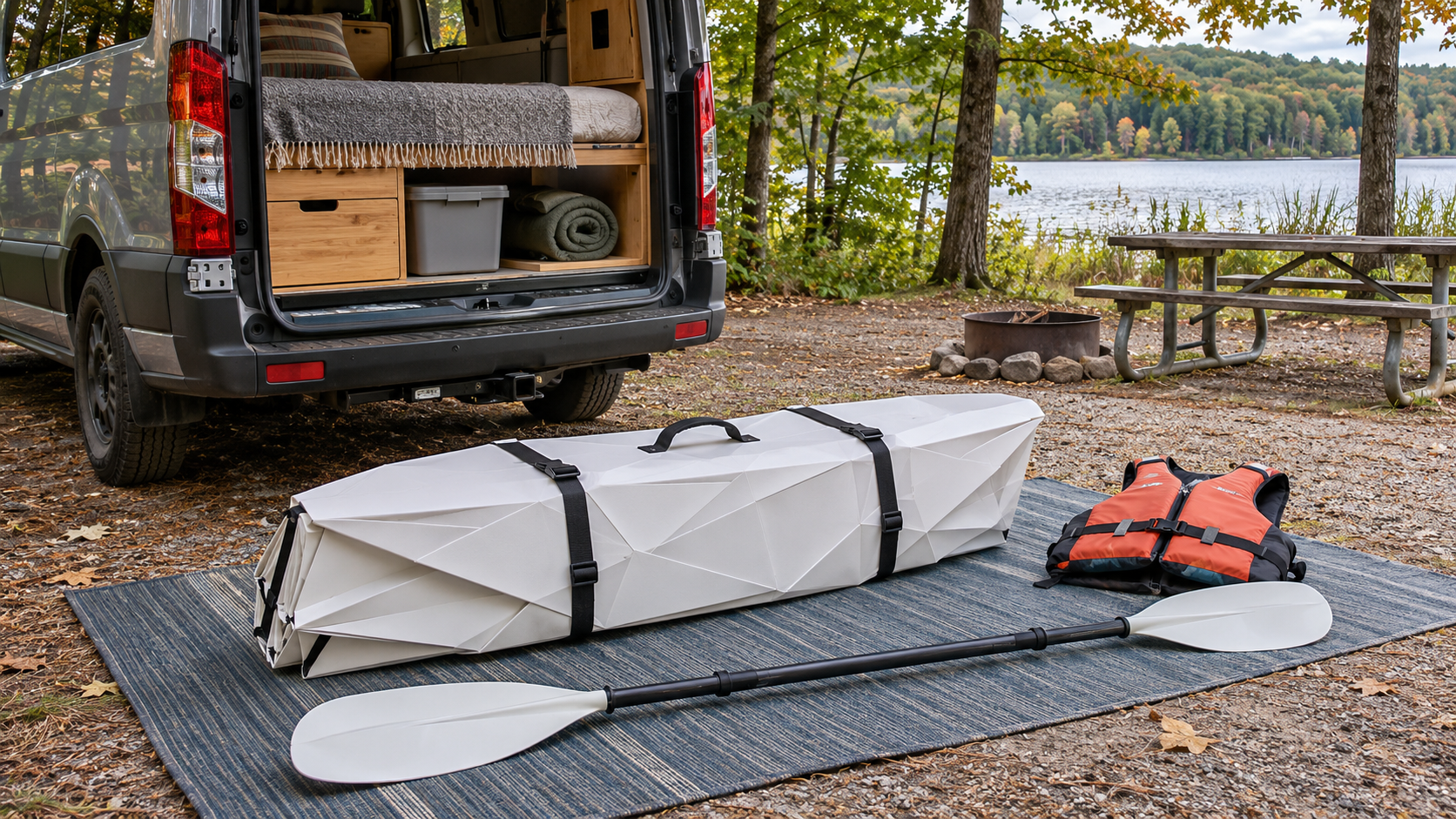
Make a mock-up with cardboard using the folded measurements for the exact boat you’re considering. Try sliding it in with the bed, bins and bikes in travel position. Then plan a separate spot for the paddle and life jacket. I’d keep the boat close to the doors and make space to open it up and dry it after a paddle. Packing a wet boat away next to bedding is the kind of small inconvenience that can make me leave gear at home.
How I’d plan a first outing
I’d practice the fold at home and pick a short outing from an easy launch on a sheltered lake. Wear a properly fitted paddling life jacket and check wind and conditions before leaving shore. For exposed Great Lakes water or longer touring days, I’d choose a boat suited to those conditions.
My buying call
I’d consider the Inlet if I wanted to paddle regularly and carrying a rigid boat was the thing stopping me. If I only paddle a few times a year at places with rentals, I’d rent first. And if I had a good way to carry a hard-shell kayak I already liked, I’d compare the time spent loading it with the time spent folding and drying the Inlet before making the switch.
Amazon link is a paid link.
Sources: U.S. Coast Guard life jacket guide
Why I switched after one trip on Silver Lake
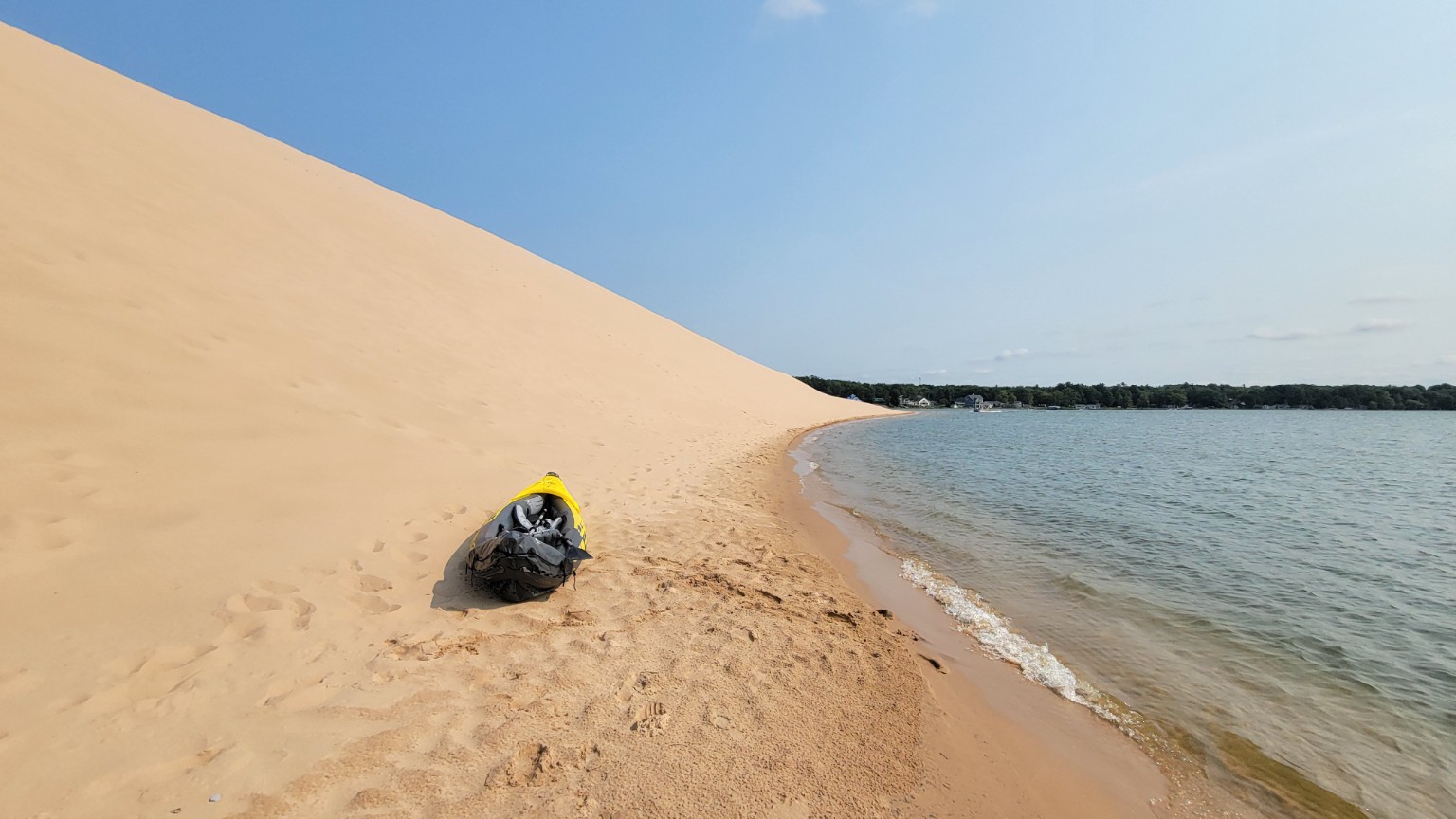
The only time I took my Intex Explorer K2 out was at Silver Lake, Michigan. We paddled from the state park over to the dunes, watched people for a while, and enjoyed the sun. It was a lot of fun. The one thing that bothered me was that my arms kept rubbing against the vinyl sides as I paddled. After a while, it felt like a burn.
By the time we were ready to head back, the wind had picked up. The kayak was easy enough to turn, but making progress into the wind was another story. We couldn’t paddle back across the lake, so we went to the shoreline and deflated the kayak in someone’s backyard. The folks there were kind enough to have their son drive us around the lake in his pickup and drop us back at the campground.
It’s a story I’ll remember forever. It’s also the last time I used that kayak. I bought two folding Oru kayaks after that. They’re still easy to transport, there’s nothing to inflate, and my arms don’t rub against the sides when I paddle. I don’t have an air chamber to worry about puncturing, either. In my experience, the Orus also make better progress in wind. That mattered most to me after Silver Lake.
I had a good time in the K2 before the wind picked up, and I can see why someone would buy one. If you want a portable tandem for occasional paddles on sheltered, calm water, it gives two people a way to get out together without a roof rack. The vinyl rubbed my arms, but fit and paddling style can change how that feels. My one trip tells me where I’d use the K2: close to an easy landing and on a day with little wind in the forecast.
As an Amazon Associate I earn from qualifying purchases.