What a handwritten desert map, an owl named Cedric, and a silent B have to do with the way I travel today.
The first thing that stopped me in King’s Quest wasn’t a dragon. It was the silent B in climb.
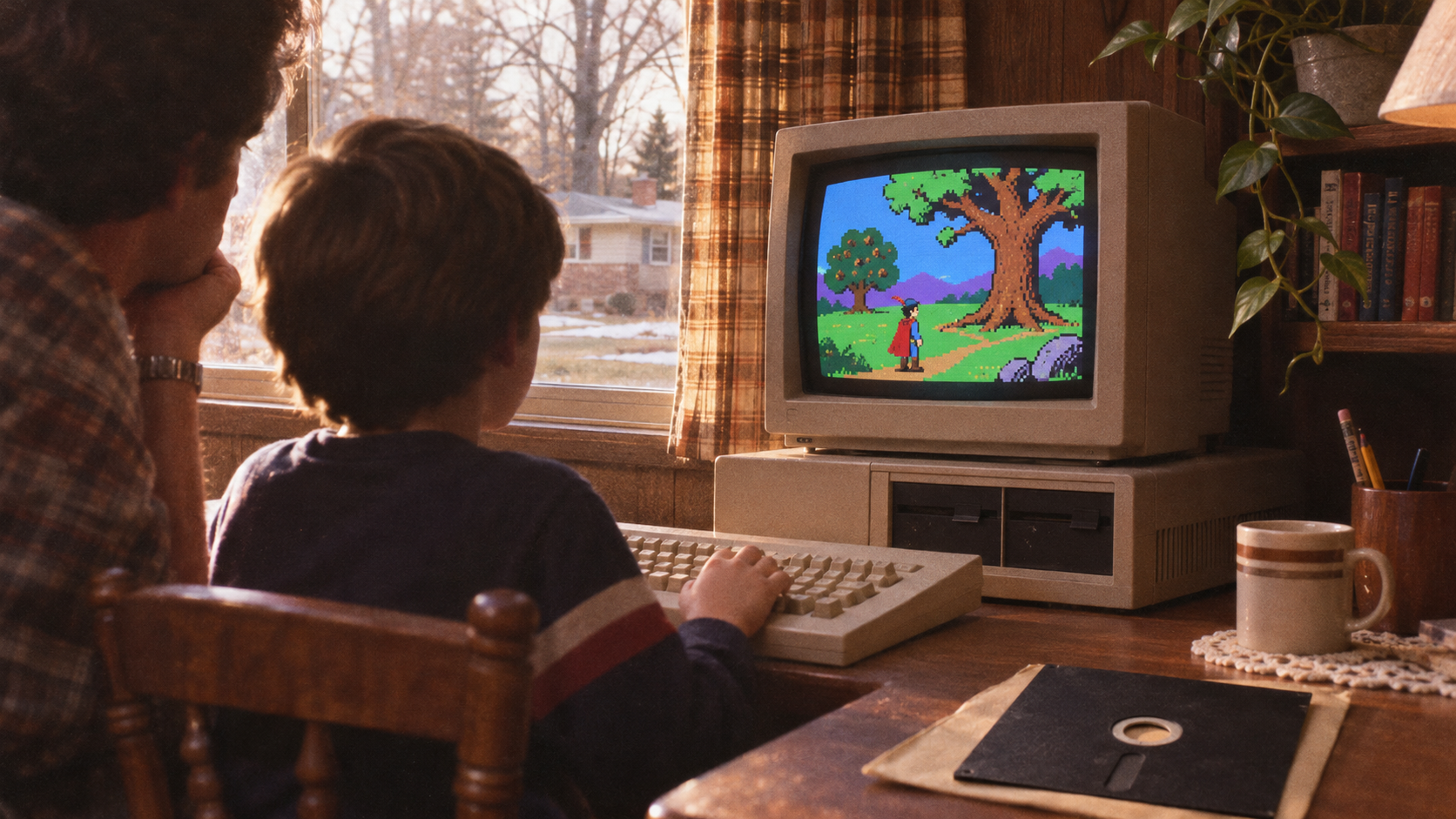
My dad and I got my first copy at Gibraltar Trade Center, back when computer games came on 5¼-inch floppy disks. You typed what you wanted the character to do. I still remember the sequence: climb the tree, pick up the walnut, climb back down, open the walnut. I kept typing clim tree. I was young enough that I didn’t know there was a B at the end, and for the longest time I couldn’t get past that tree.
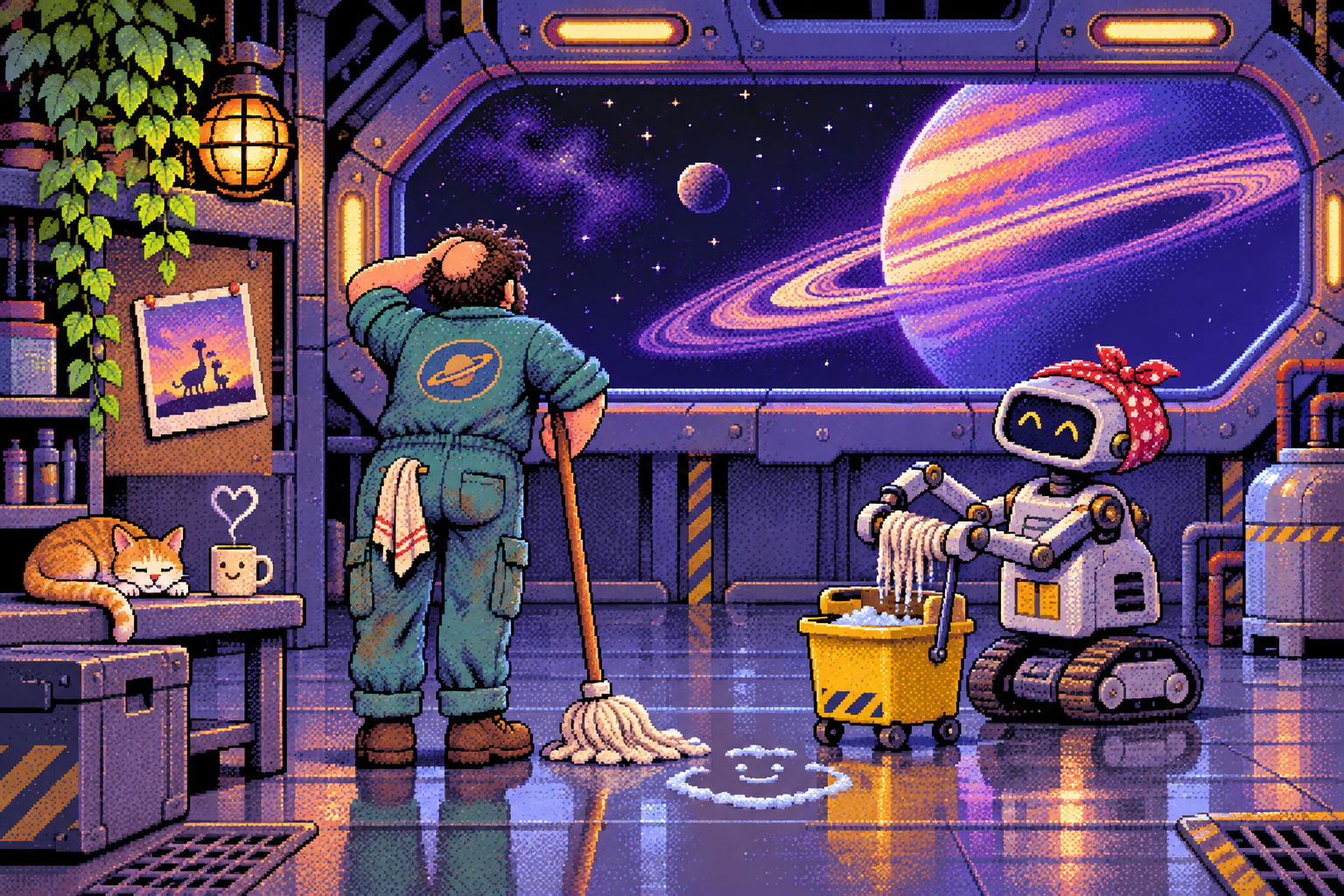
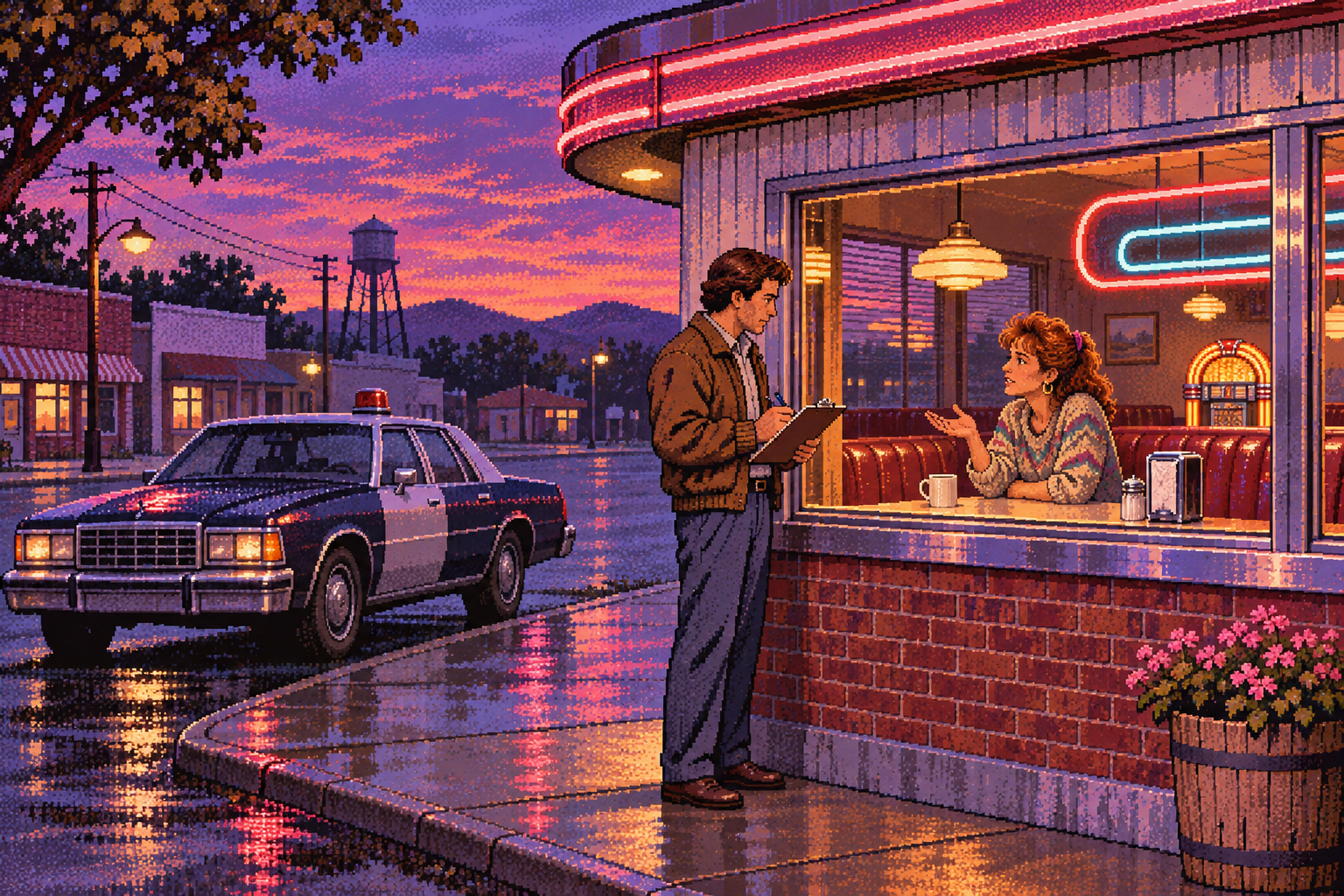
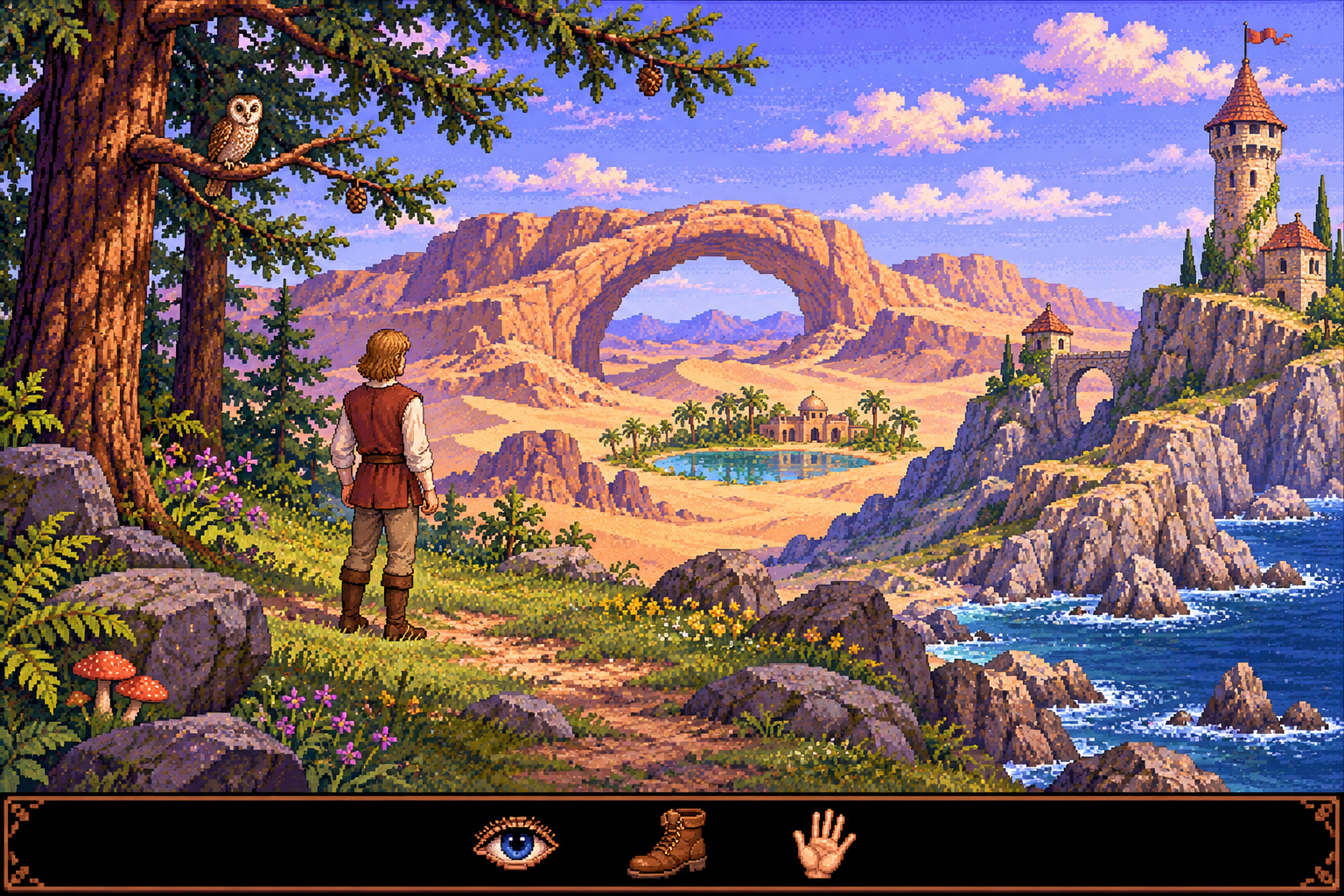
By the time Dad and I picked up King’s Quest V at CompUSA, games were coming on CDs. I think it was a ten-CD pack with Police Quest and Space Quest, the one with Roger Wilco, the space janitor. Now I had an eye to look at things, feet to walk, and a hand to pick things up. No spelling test. Naturally, the next thing I did was get lost in the desert.
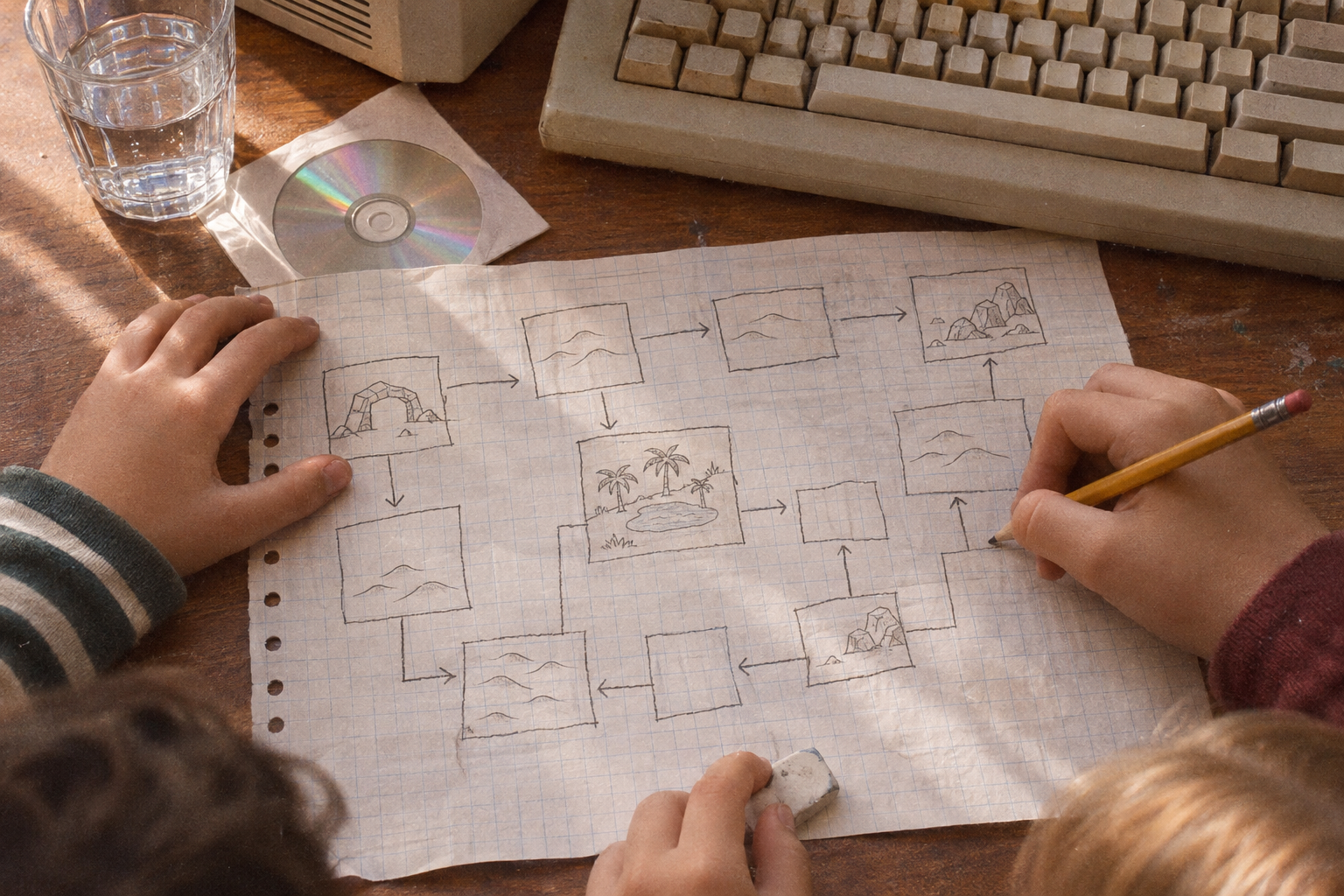
My friend Brian and I drew a map on paper to keep track of where we’d been. We played for what felt like forever, saving as we went. When we finally beat it, I was blown away. But the part I can still picture is the two of us trying to figure out where to go next.
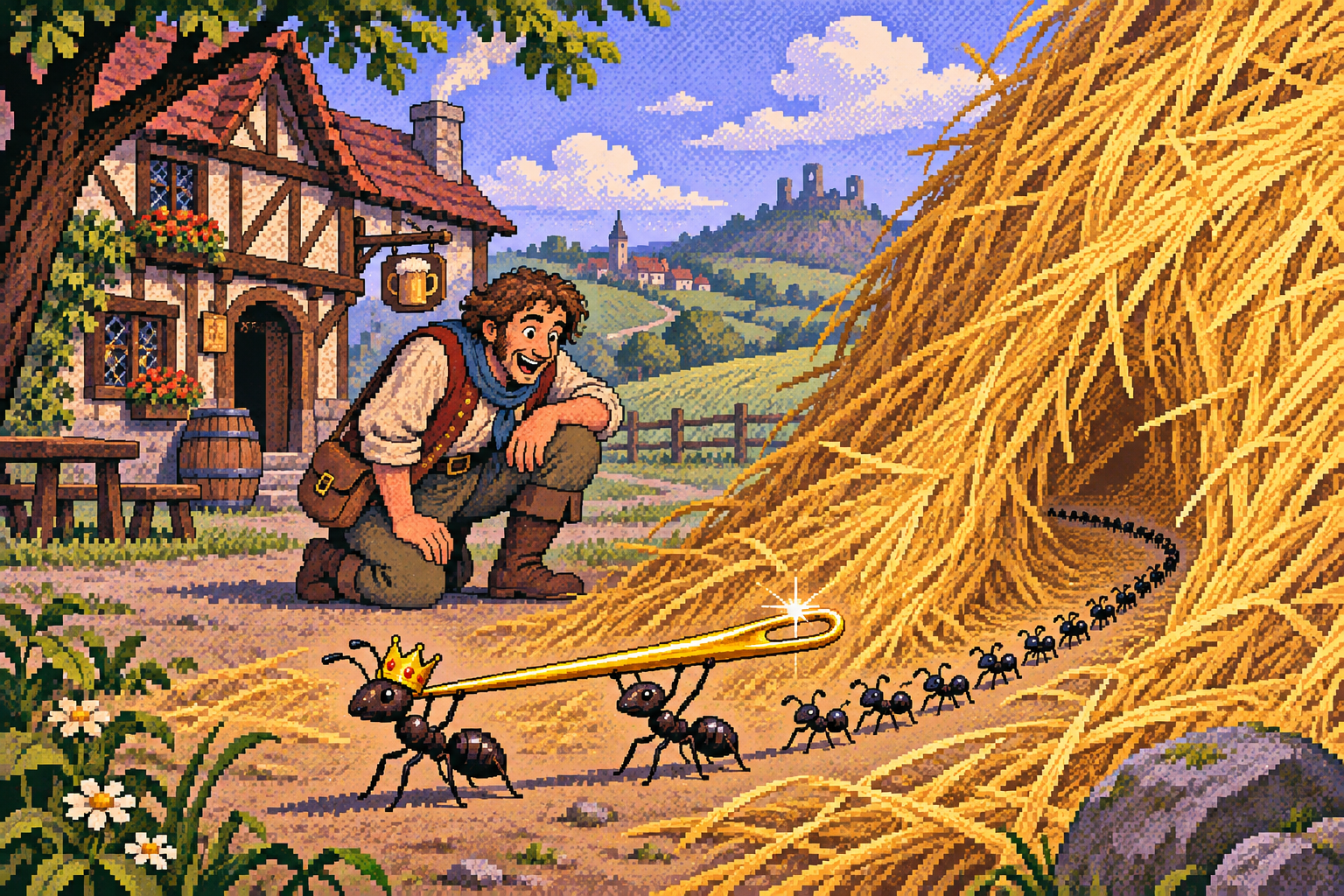
Just last week at work, someone brought up how ants show up if you leave crumbs on the floor. My mind went straight to the ant king in King’s Quest V. In the game, you help King Antony’s ants, and later they return the favor by singing their way through a haystack to find a golden needle. Apparently those games are still running in the background. Hear the ants sing: track 11, “The Ant Song (vocals).”
Did the game change me, or was I already that kid?
That’s the part I wanted to look into. Psychologists use openness to experience for a broad tendency to be receptive to new ideas, experiences, and ways of seeing things. It’s one of the Big Five personality traits, not a test that sorts people into adventurers and everybody else. A large review of studies that followed people over time found that personality differences generally become more stable as we grow up, but our traits can still change. The kid I was matters. He didn’t get the final say.
There’s also more than one way to be curious. In Todd Kashdan and colleagues’ research, the pleasure of exploring something unfamiliar and the thrill of taking a risk showed up as distinct sides of curiosity. I like that distinction. I want to see what’s at the end of the trail. I don’t need the trail to be hanging off the edge of a cliff.
A survey of 398 adult gamers found that different kinds of curiosity were linked to different things people enjoyed about games. It didn’t follow kids into adulthood or ask whether they went camping. But it makes me consider the reverse of my original question: maybe I liked those games because they gave me more of something I already liked doing.
The two ideas can sit together. In a study that followed university students before and after studying abroad, students who were more open to experience were more likely to choose a longer stay abroad. Studying abroad was also associated with increases in openness, even after researchers accounted for the initial differences they measured. A semester abroad isn’t a Sierra game or a camping trip. What I take from it is that who you are can help determine what you try, and what you try can help shape who you become.
What Sierra gave me
I’ve bought the collection about three times since. I remember those big 5¼-inch floppies, then the smaller 3½-inch ones, then CDs. The format kept changing. I kept wanting to play the same games. I eventually went back and finished the ones I’d missed, too.
In King’s Quest VI, decisions could change the ending, and “Girl in the Tower” is still in my YouTube favorites. It gets to me a little every time. Listen to the original “Girl in the Tower.” King’s Quest VII looked like a cartoon, and I got to play as Queen Valanice and her daughter Rosella. And I never forgot Cedric, the talking owl from V. Years later, when I picked an owl icon for my AI assistant in ChatGPT, he was the reason.
So here’s a thank-you to Roberta Williams, her husband Ken Williams, and the people at Sierra who designed, drew, programmed, and scored those worlds. I can’t prove your games are why I built a camper van and started taking the long way. I do know you gave my dad and me something to share, gave Brian and me a desert worth mapping, and made me want adventures where I could talk to the people in the village and solve a puzzle without having to draw a sword. That changed something for me.
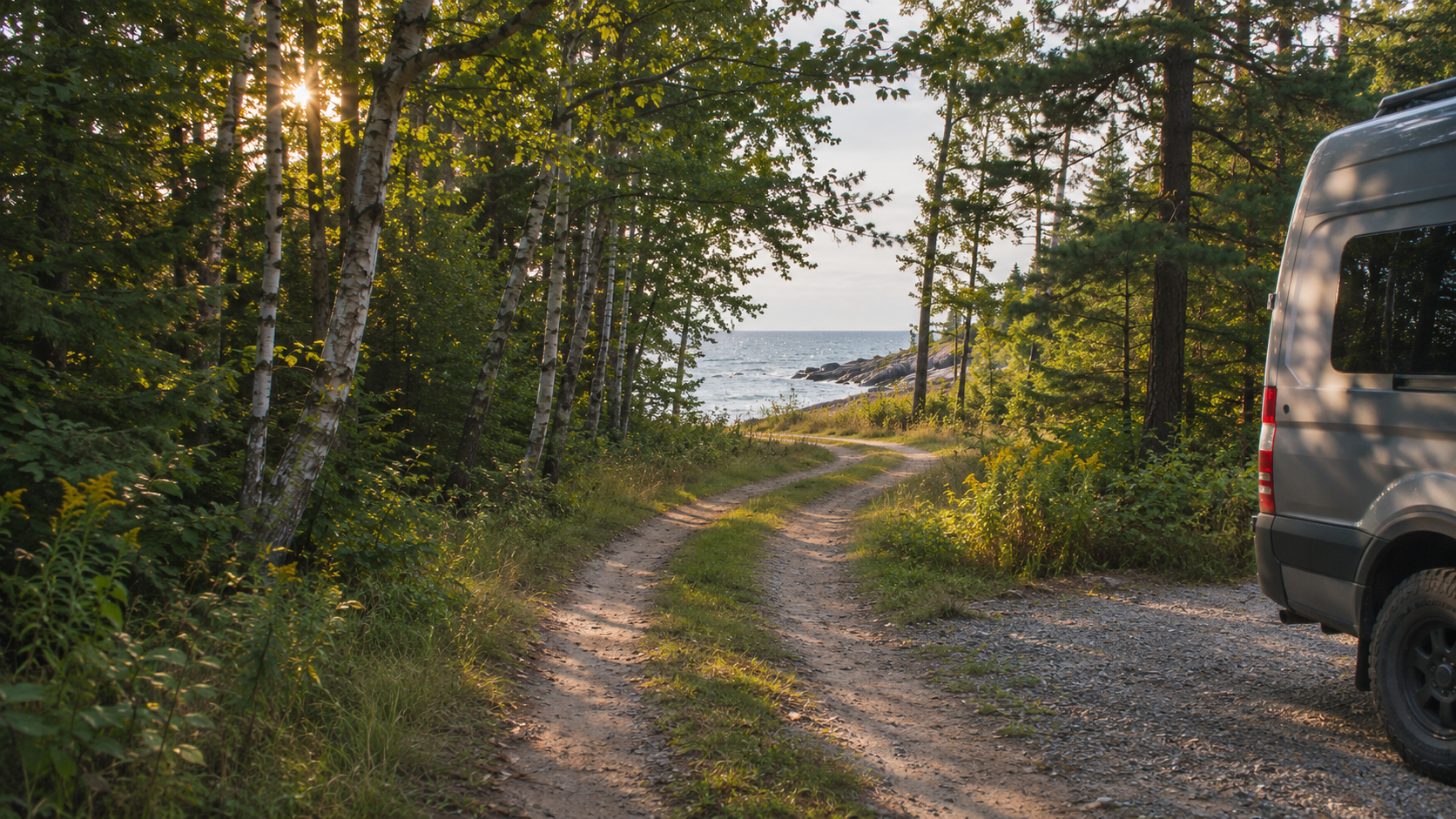
Now, when I step out of the van somewhere I’ve never been, I don’t have to be the first person who ever stood there. I get to see it for the first time myself. That’s plenty. And if there’s a tree to climb, at least I know how to spell it now.
Want to go back to Daventry?
I’d love to see a new King’s Quest about King Graham and his family. Give me a village to get lost in, people worth talking to, and a puzzle that makes me grab a pencil again. If that sounds like your kind of adventure too, sign the petition for a new King’s Quest. We’re asking Activision and Xbox to give Daventry another chapter and invite Roberta and Ken Williams to help tell it, if they’d like to.
A look back at Sierra
- King’s Quest V, VI, and VII: archived boxes, manuals, and other material from each game.
- Sierra’s 15th-anniversary catalog: original advertisements, game art, and screenshots from the CD-ROM era.
- Space Quest Collection and Police Quest Collection: official storefront galleries for two other Sierra series I remember from that era.