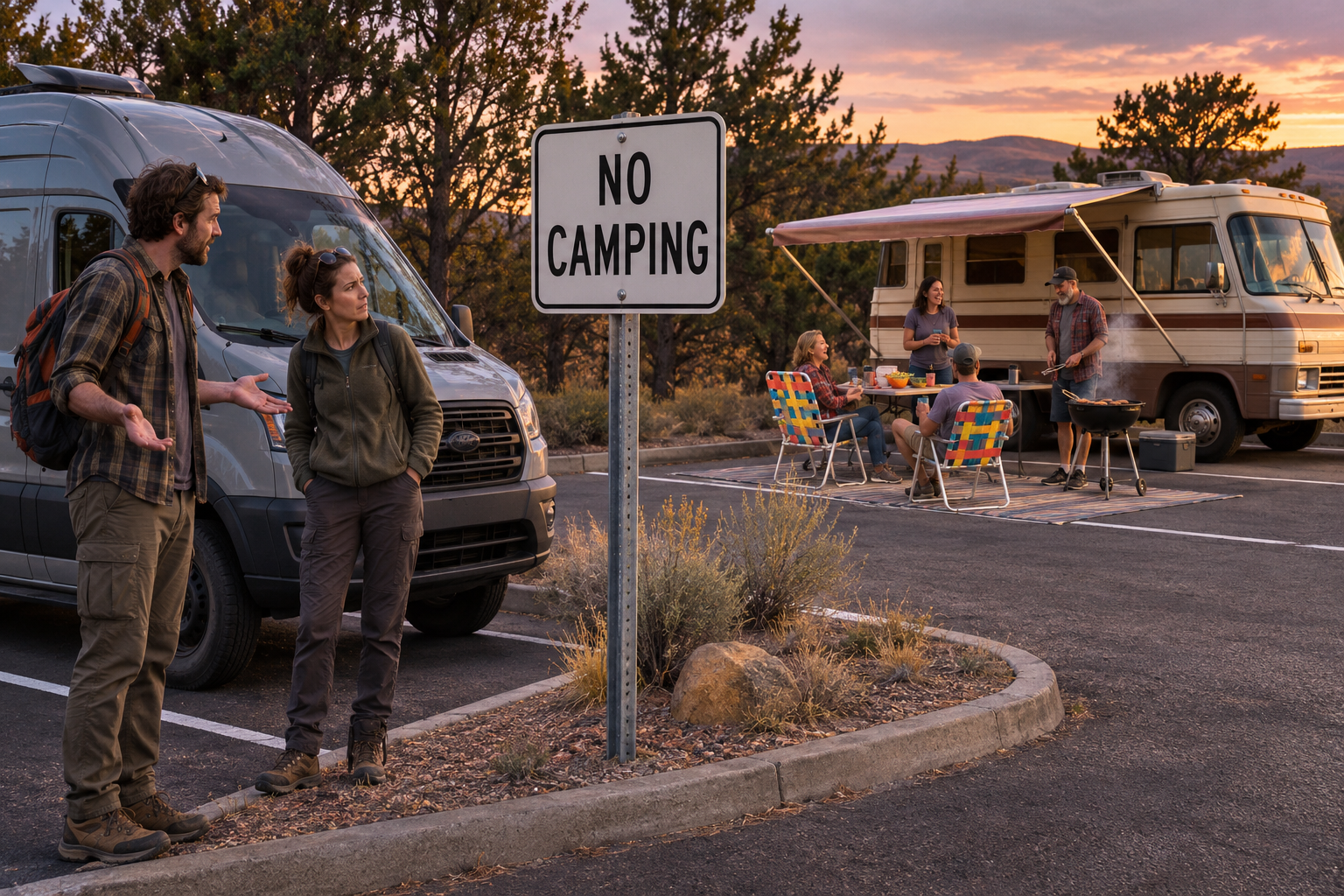
When I was a kid, I was riding with my dad in his Mazda pickup when I saw a sign that said NO TRUCKS. I looked around and thought, Well, we’re in a truck. Are we going to get pulled over? It hadn’t occurred to me that the sign might be talking about a different kind of truck.
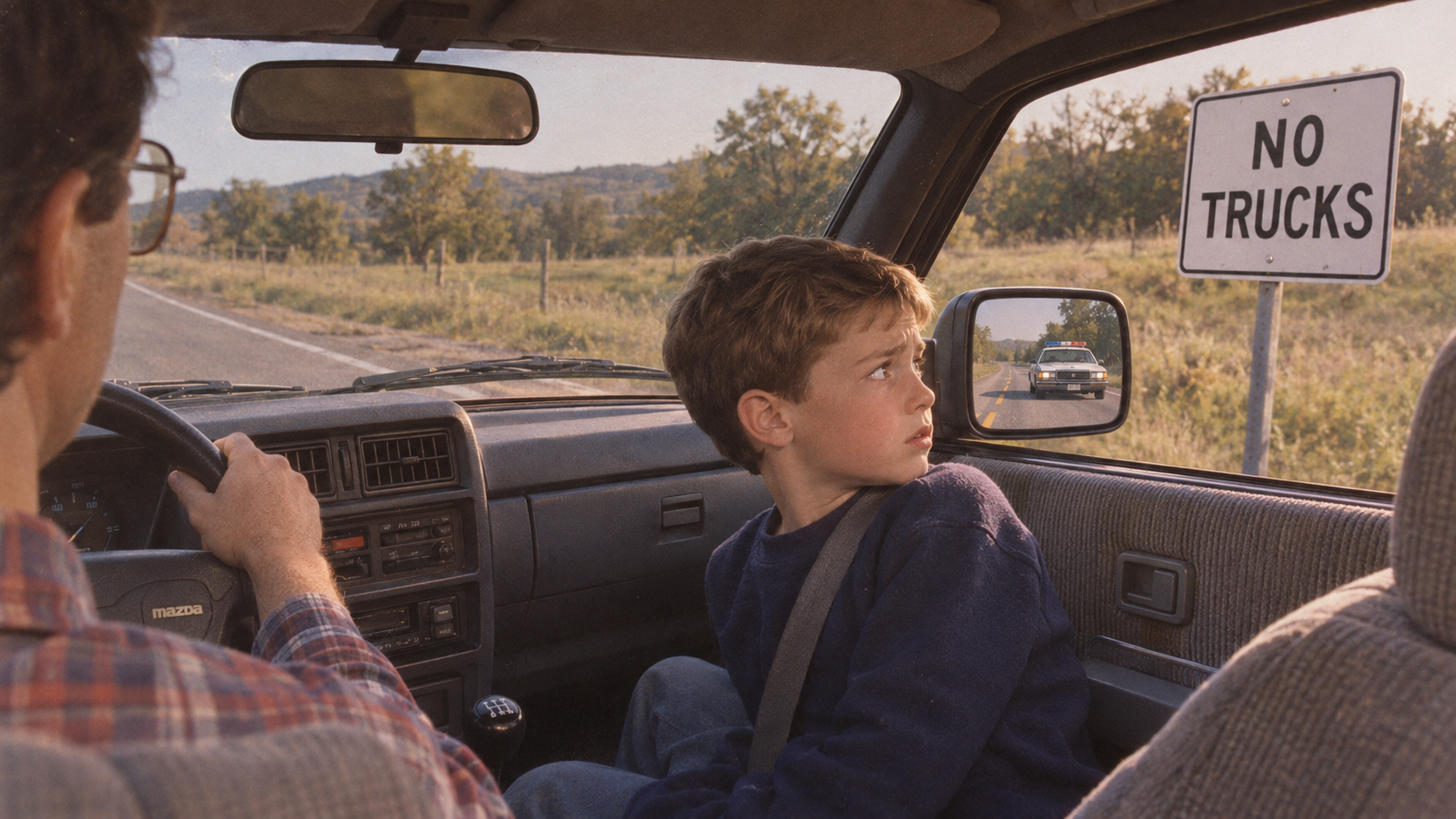
Years later, on a road trip somewhere out West, I had almost the same reaction. I was traveling in an RV and saw NO CAMPING at a rest area. I wasn’t looking to put out a couple of lawn chairs or fire up a grill. I just wanted to get some sleep so I could drive safely the next day. But I wasn’t sure what the sign meant for me, and I was afraid to pull in and stay.
Parking, sleeping, and camping are three different questions
- “No camping.” At some rest areas, you can sleep inside a parked vehicle even though pitching a tent, putting out an awning, or extending your slide-outs is prohibited. The sign alone doesn’t tell you whether you can sleep there or how long you can stay. Being in a regular car instead of an RV doesn’t settle it, either.
- “No overnight parking.” Plan to spend the night somewhere else. Keeping the chairs packed or staying inside the vehicle doesn’t change the parking restriction. Look for posted hours or exceptions.
- “Four-hour limit.” Count from when you arrive, not when you fall asleep. And don’t confuse a lot that’s open 24 hours with a lot that lets you stay for 24 hours.
A couple of states show why the wording matters. A Wyoming DOT brochure says tired drivers can sleep in their vehicles even though camping is prohibited. That brochure is from 2011, so I’d still check the signs at the specific stop before counting on a longer stay. Montana DOT spells out its overnight parking rule: one space per vehicle, up to 12 hours, and no camping. Those examples help explain the difference, but neither tells me what was allowed where I saw that sign.
Isn’t resting the whole point?
That was my question then, and it still seems fair. If a rest area is there to help tired drivers get off the highway, I wish the signs made it easier to tell whether you can take a nap, stay a few hours, or stay until morning. NHTSA recommends pulling into a safe, designated place for a short nap if you’re getting drowsy. That can help for a little while. If you’re still too tired, don’t get back behind the wheel just to make the next exit.
Now, when I think I’ll need a full night, I look up a stop and a backup before I’m worn out. I use Overnight Atlas to find options, then check the operator’s rules and read the signs at the entrance and in the lot. If I can’t confirm that I can sleep there for as long as I need, I don’t plan my night around it.
I don’t need a campsite every time I travel. Sometimes I just need a safe place to close my eyes and know I’m okay to be there.